
My Applegate

Directory Sections

Directory Indexes

Applegate Information

Applegate Partners

ABC Audited

PMBL Ltd

Unit D, Leach Road
Chard Business Park
Chard
Somerset
TA20 1FA ( Road Map )

Tel: 0870 770 5311
Fax: 0870 770 5322

Number of Employees: 1 - 20

Visit our website
www.pmbl.co.uk


paulpmbl.co.uk

Batteries

Batteries

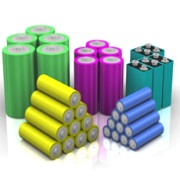
OVER 200 YEARS COMBINED BATTERY BUILDING EXPERIENCE which means that we have a proven track record and history of success in all batteries including:

  • Lithium Batteries
  • Lithium ION Batteries
  • Lithium Polymer Batteries
  • Lithium Battery Packs
  • Cylindrical Lithium Manganese
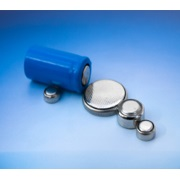
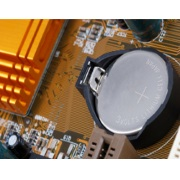
  • Coin Size Lithium Manganese
  • Rechargeable Lithium ion batteries
  • Lithium Cells
  • NIMH Batteries
  • NICAD Batteries
  • Rechargeable Batteries
  • Nickel Cadmium

Primary and Secondary Battery Chemistries

Primary and Secondary Battery Chemistries

We are experienced in all primary and secondary battery chemistries including Lithium Ion Batteries (Li-Ion), Lithium Polymer Batteries, Lithium Primary, Nickel Metal Hydride (NiMH Batteries), Nickel Cadmium (NiCd Battery), Alkaline Primary (ZnMnO2), Sealed Lead Acid (SLA).

Our production facilities include battery pack assembly, lead assembly production, encapsulation using foam or resin based products, foil/ soft touch printing and ultrasonic welding along with electrical test and computer controlled capacity testing.

PMBL Ltd (Batteries)

An innovative customer orientated company, we pride ourselves on our ability to offer the complete procurement solution for all battery technologies. From the initial project consultation > through design consultation > prototype approval > manufacture > delivery.

While assisting our client in the management of their supply chain we will ensure a high quality, cost effective solution to their battery needs all within an ISO 9001:2000 environment.

Battery Manufacturers

As well as using our own batteries, at PMBL we work with batteries produced by the major battery manufacturers to ensure that we always provide the most appropriate solution for your requirements.

Different battery manufacturers supply batteries with different specifications, properties and costs. Our engineers have extensive knowledge of the batteries available on the market and will work with you to confirm your design requirements and recommend the most appropriate battery and most economical solution.

Approvals
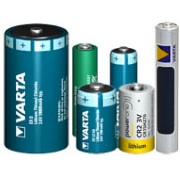
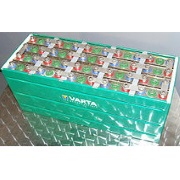
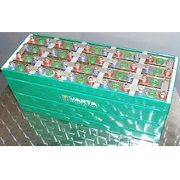
PMBL are recommended by VARTA for battery pack assembly

We are proud to have been awarded approved battery assembler status by the following companies:- VARTA, GP Batteries and Ultralife Batteries.

Manufacturers that we work with

  • PMBL
  • Varta Microbattery
  • GP Batteries
  • Saft
  • Panasonic
  • Duracell
  • Sanyo
  • Tadiran
  • Ultralife
  • Yuasa
  • Samsung
  • LG

For more information about the types of batteries that the companies can supply, click on the link to the DataSheets

Talk To Us
Talk to one of our battery specialists today for more information.

Call us on 0870 7705311 or email solutions@pmbl.co.uk or send us your enquiry on our simple contact form and will will get back to you as soon as possible.

Battery Design Service

Battery Design Service

Custom Built Battery Packs to Your Requirements

Quality Assurance
At PMBL we have an ongoing programme to continuously improve our service to our customers. We are proud to have been awarded ISO9001 certification for our quality assurance management.

You can be assured that your custom battery solutions will be delivered on time and to the correct specification - every time.

Production
Facilities
Our production facilities include

  • battery pack assembly
  • electrical and computer controlled capacity testing
  • ultrasonic welding
  • lead assembly production
  • encapsulation using foam or resin based products
  • hot foil/ soft touch printing 

Battery Chemistries
We are experienced in all primary and secondary battery chemistries including Lithium ion, Lithium Polymer, Lithium Primary, Nickel Metal Hydride, Nickel Cadmium, Alkaline Primary, Lithium Manganese, Lithium thionyl chloride and lead acid.

Lead Acid Batteries

Lead Acid Batteries

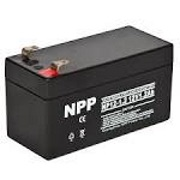
During the mid 1970s, researchers developed a maintenance-free lead acid battery, which could operate in any position. The liquid electrolyte was transformed into moistened separators and the enclosure was sealed. Safety valves were added to allow venting of gas during charge and discharge.

Driven by diverse applications, two designations of batteries emerged. They are the sealed lead acid (SLA), also known under the brand name of Gelcell, and the valve regulated lead acid (VRLA). Technically, both batteries are the same. No scientific definition exists as to when an SLA becomes a VRLA. (Engineers may argue that the word 'sealed lead acid' is a misnomer because no lead acid battery can be totally sealed. In essence, all are valve regulated.)

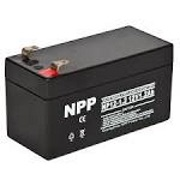
The SLA has a typical capacity range of 0.2Ah to 30Ah and powers portable and wheeled applications. Typical uses are personal UPS units for PC backup, small emergency lighting units, ventilators for health care patients and wheelchairs. Because of low cost, dependable service and minimal maintenance requirements, the SLA battery is the preferred choice for biomedical and health care instruments in hospitals and retirement homes.

The VRLA battery is generally used for stationary applications. Their capacities range from 30Ah to several thousand Ah and are found in larger UPS systems for power backup. Typical uses are mobile phone repeaters, cable distribution centres, Internet hubs and utilities, as well as power backup for banks, hospitals, airports and military installations.

Lithium ION Battery

If you need advice about Lithium Ion Batteries we can help.  Call PMBL now on 0870 770 5311 or email:  solutions@pmbl.co.uk

PMBL can manufacture Lithium Ion batteries from cells by Varta, GP, Saft, Sanyo and many others.

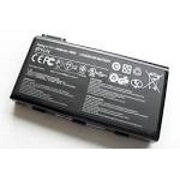
The Li-ion Battery is a low maintenance battery, an advantage that most other chemistries cannot claim. There is no memory and no scheduled cycling is required to prolong the battery's life. In addition, the self-discharge is less than half compared to Ni-Cd and NiMH, making the Li-ion well suited for modern fuel gauge applications.

The high cell voltage of Lithium ion Battery allows the manufacture of battery packs consisting of only one cell. Many of today's mobile phones run on a single cell, an advantage that simplifies battery design. Supply voltages of electronic applications have been heading lower, which in turn requires fewer cells per battery pack. To maintain the same power, however, higher currents are needed. This emphasises the importance of very low cell resistance to allow unrestricted flow of current.

Alkaline Batteries

Alkaline Batteries

Alkaline or Alkaline Manganese Dioxide cells, have many advantages over zinc-carbon cells including

  • higher energy output
  • longer shelf life,
  • better leakage resistance, and
  • superior low temperature performance. 

They provide excellent performance at a price premium for applications such as toys, radios, and flashlights. Brand name recognition, i.e. Energiser and Duracell, make this chemistry an excellent choice when product image is important.

Features

  • Cell Voltage: 1.5V (nominal) 0.8 (cut-off)
  • Capacity: 34 mAh to 15,000 mAh
  • Energy by Weight: 75 Wh/lb. (163 Wh/kg)
  • Energy by Volume: 6.5 Wh/cubic inch (398 Wh/litre)
  • Shelf Life: 5 years to 80% capacity (20°C)
  • Temperature Range: -20°C to 55°C
  • Sizes: AAAA, AAA, AA, C, D and 9 volt
  • Weight: 12grams to 135grams

Applications:
Cameras, Electric Shavers, Electronic Calculators, Electronic Door Locks, Fire Detectors, Flashlights, Pagers, Strobes, Tape Recorders, Toys, and other cordless products.

NICAD Batteries

Nickel Cadmium (Ni-Cd) Batteries
Among rechargeable batteries, Ni-Cd remains a popular choice for applications such as two-way radios, emergency medical equipment, professional video cameras and power tools. Over 50 percent of all rechargeable batteries for portable equipment are Ni-Cd. However, the introduction of batteries with higher energy densities and less toxic metals is causing a diversion from Ni-Cd to newer technologies.

PMBL can manufacture your Ni-Cd batteries with cells from GP, Saft, Sanyo, Emmerich and many more.

Advantages and Limitations of Ni-Cd Batteries

Advantages

  • Fast and simple charge - even after prolonged storage.
  • High number of charge/discharge cycles - if properly maintained, the Ni-Cd provides over 1000 charge/discharge cycles.
  • Good load performance - the Ni-Cd allows recharging at low temperatures.
  • Long shelf life - in any state-of-charge.
  • Simple storage and transportation - most airfreight companies accept the Ni-Cd without special conditions.
  • Good low temperature performance.
  • Forgiving if abused - the Ni-Cd is one of the most rugged rechargeable batteries.
  • Economically priced - the Ni-Cd is the lowest cost battery in terms of cost per cycle.
  • Available in a wide range of sizes and performance options - most Ni-Cd cells are cylindrical.

Limitations

  • Relatively low energy density - compared with newer systems.
  • Memory effect - the Ni-Cd must periodically be exercised to prevent memory.
  • Environmentally unfriendly - the Ni-Cd contains toxic metals.
  • Some countries are limiting the use of the Ni-Cd battery.
  • Has relatively high self-discharge - needs recharging after storage.

Lithium Batteries

Lithium Batteries

Lithium Polymer Batteries
The Li-polymer batteries differentiate themselves from other battery systems in the type of electrolyte used. The original design, dating back to the 1970s, uses a dry solid polymer electrolyte only. This electrolyte resembles a plastic-like film that does not conduct electricity but allows an exchange of ions (electrically charged atoms or groups of atoms). The polymer electrolyte replaces the traditional porous separator, which is soaked with electrolyte.

The dry polymer design offers simplifications with respect to fabrication, ruggedness, safety and thin-profile geometry. There is no danger of flammability because no liquid or gelled electrolyte is used.

PMBL can supply Lithium Polymer batteries from Varta, Sanyo, Ultralife and many others

Lithium Manganese Dioxide
Manganese dioxide lithium cells are also available in standard cylindrical and coin sizes. They are in many ways equivalent to poly (carbon monofluoride) cells in terms of construction, energy density, safety and OCV, but typically have only about half the service life. However, manganese dioxide-lithium cells are well-suited to applications having relatively high continuous- or pulse-current requirements, since the cell internal impedance is somewhat lower than for other types

Lithium Manganese Dioxide Batteries

Features

  • Cell Voltage: 3.0V (nominal)
  • Capacity: 30mAh to
  • Energy by Weight: Depending on cell configuration, up to 105 Wh/lb.
  • Energy by Volume:(230 Wh/kg); 9.0 Wh/in.3 (550 Wh/l).
  • Discharge Characteristics: Flat (stable voltage) discharge curves.
  • Shelf Life:10+ years at 20°C
  • Temperature Range: -20°C to +60°C
  • Sizes: Various Coin & Round Cells.

Applications:
General purpose in photographic and electronic applications requiring small, high power batteries, e.g., security transmitters, smoke alarms, computer peripherals, communications equipment, cameras, personal organizers, memory backup, lighting.

Rechargeable Battery

Rechargeable Battery

PMBL offer a comprehensive range of battery charging solutions. After discussing your requirements we will be able to recommend either a bespoke or off the shelf standard charging solution.

Talk to one of our battery specialists for more information, call us on 0870 7705311 or email solutions@pmbl.co.uk or send us your enquiry on our simple contact form.

NIMH Batteries

The success of the NiMH has been driven by its high energy density and the use of environmentally friendly metals. The modern NiMH offers up to 40 percent higher energy density compared to Ni-Cd. There is potential for yet higher capacities, but not without some negative side effects.

Both NiMH and Ni-Cd are affected by high self-discharge. The Ni-Cd loses about 10 percent of its capacity within the first 24 hours, after which the self-discharge settles to about 10 percent per month. The self-discharge of the NiMH is about one-and-a-half to two times greater compared to Ni-Cd. Selection of hydride materials that improve hydrogen bonding and reduce corrosion of the alloy constituents reduces the rate of self-discharge, but at the cost of lower energy density.

The NiMH has been replacing the Ni-Cd in markets such as wireless communications and mobile computing. In many parts of the world, the buyer is encouraged to use NiMH rather than Ni-Cd batteries. This is due to environmental concerns about careless disposal of the spent battery.

PMBL can manufacture your NiMH batteries with cells from Varta, GP, Saft, Sanyo, Emmerich and many more.
Products and Services

PREMIUM Ads sponsored by PMBL Ltd

Lithium, Rechargeable, NICAD, NIMH, Simply Call 0870 770 5311

PMBL Ltd

Last Updated: 25-Nov-2010

Results page

The number of times that this company page has been viewed can be seen on the results page for PMBL Ltd

The number of page impressions and therefore the number of users reaching a company page can be improved by advertising in Applegate. Use Contact Applegate for more details.

Company IndexABCDEFGHIJKLMNOPQRSTUVWXYZ#
Product IndexABCDEFGHIJKLMNOPQRSTUVWXYZ#
Sponsors IndexABCDEFGHIJKLMNOPQRSTUVWXYZ#
Who Sells Who IndexABCDEFGHIJKLMNOPQRSTUVWXYZ#
Town/City IndexABCDEFGHIJKLMNOPQRSTUVWXYZ

Hot LinksFast Track Results